Ethical considerations
Involving people living with dementia in research is not just a practical activity. It is a commitment to work together in a fair, respectful and accountable way. Ethical involvement is about upholding people’s rights, dignity and autonomy, and recognising that these may be experienced differently as dementia progresses. It is not about avoiding risk entirely, but about acting with care, humility and attention to people’s safety and preferences.
Stages of dementia and its progression are not easily defined. Flexibility and responsiveness are important because dementia varies from person to person and brings up individual challenges. Circumstances, abilities or communication may change over time. This means listening closely and enabling the person to lead wherever possible. This works best when involvement starts early and grows through relationships, so that we can gain a clearer understanding of what matters to someone and can respond as things change. This could mean for example shifting communication style, changing the pace of activities, or adjusting expectations.
As dementia progresses, people may find creative, sensory or less language-based methods more natural and enjoyable. Approaches such as collaging, photography, storytelling, or shared walks can offer meaningful ways to express ideas, priorities and preferences. These methods can reduce pressure, build connection and support people to contribute.
In later stages of dementia, traditional involvement is often not appropriate. The focus may move from active partnership to connection and understanding: spending time together, noticing responses, engaging in ways that bring comfort or interest; and working with care partners or staff who know the person well.
We created a resource to support you to:
- Reflect on your responsibilities as a researcher or facilitator.
- Consider the ethics of inclusion, representation, and visibility
- Think relationally how decisions affect people.
- Navigate uncertainty with care, especially when people’s capacity shift.
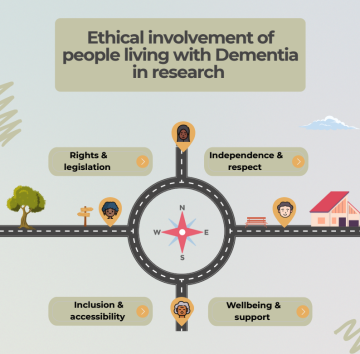
Ethical Resource
You can access the full Ethical Resource here, including reflection prompts and guidance for practice.